
A Series in Flowers · Erin Smith
A Series in Flowers
What begins as a bouquet becomes a meditation on becoming.
This series follows a flower the way Maslow’s hierarchy of needs follows a person. One layer has to be settled before the next one can hold. The work starts in the ground and keeps moving inward, and there is no last stage.
and back to the root
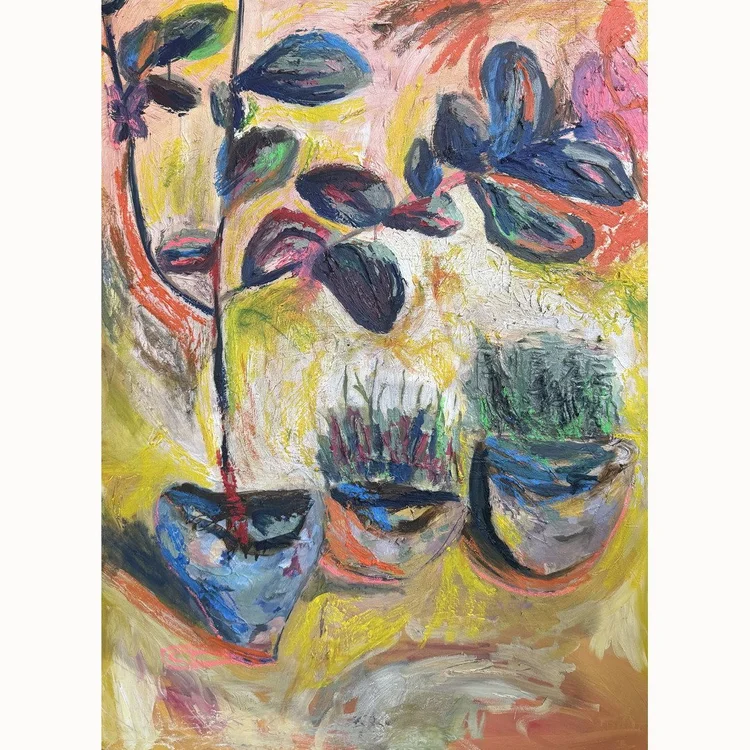
Birth · The Bud
The flower is still rooted and still on its stem, before anyone has cut it. This is the base: soil, water, air and light. Nothing is asked of it yet except to live.
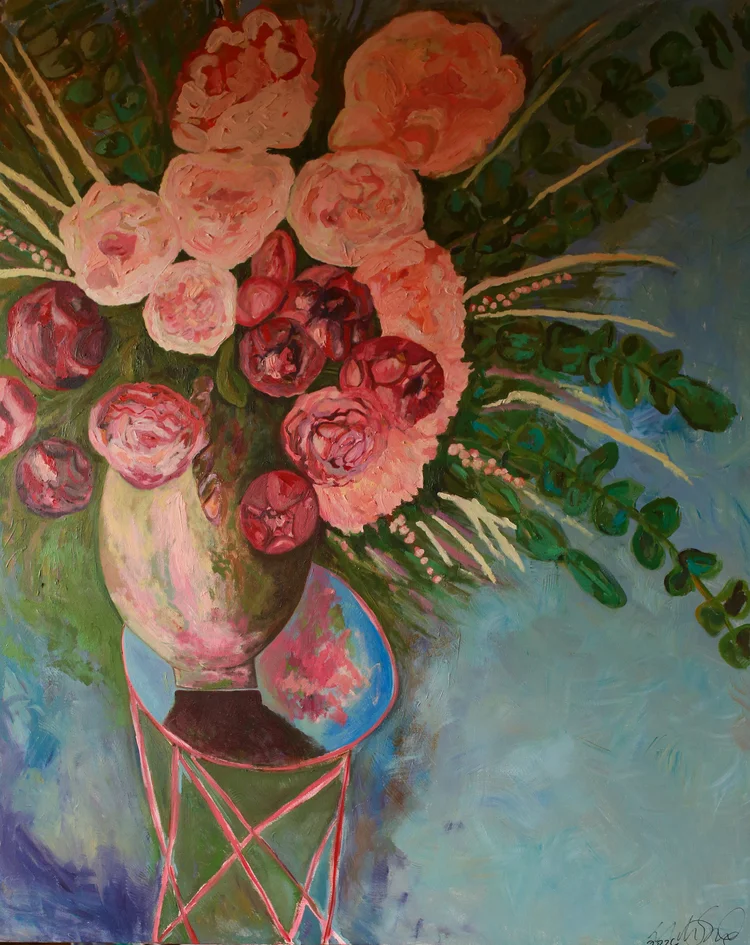
Outer · The Cut
The flower is cut, carried inside and arranged. Now it is seen, and it takes up space in a room. Something is given up to get here.
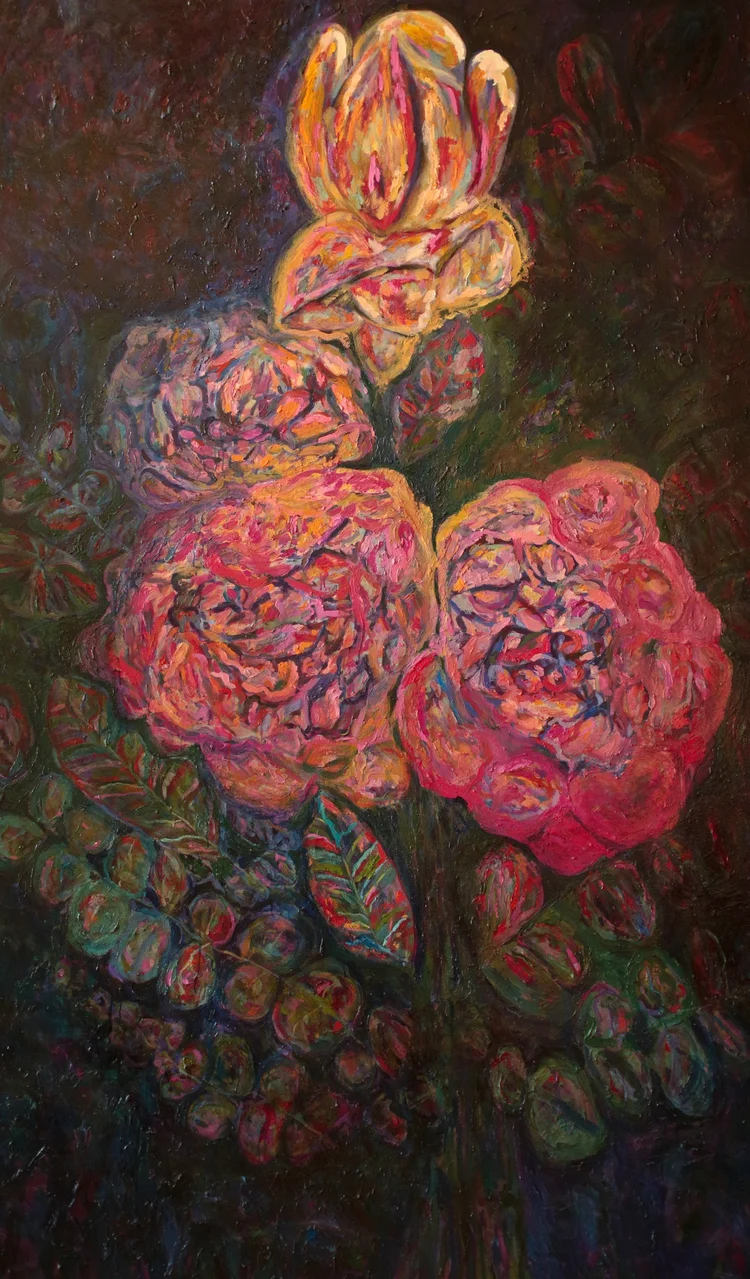
Inner · The Bloom
The paintings move inside the bloom, into the depth of the petals and the foliage. This is the part that is about the self.
Sometimes the work goes back down. A rose bush cut close to the ground sends its energy into the roots and comes back stronger. When a layer is not solid, I return to it.
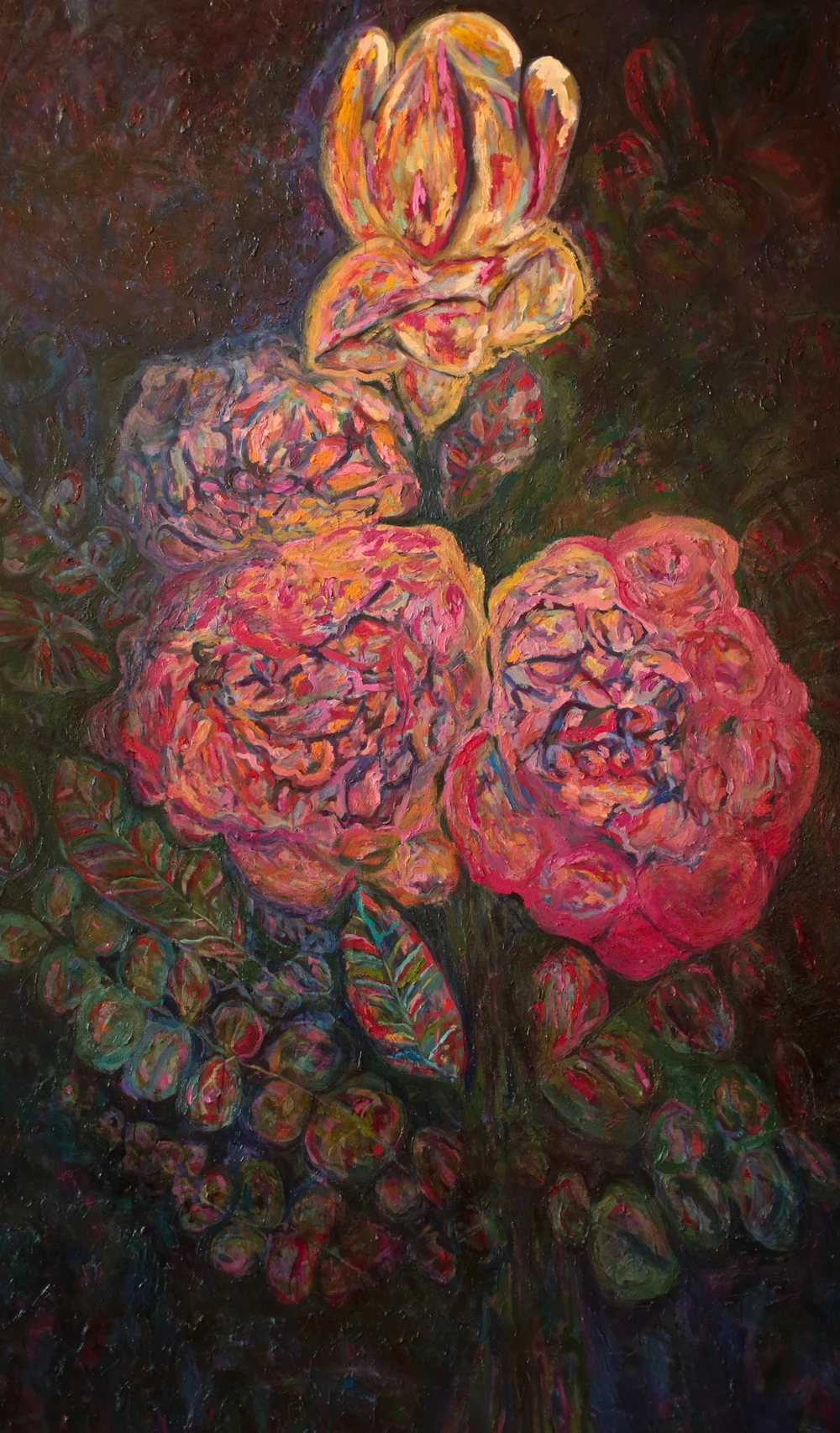
A Life's Note
Flowers can be fresh or old, new, dried up, shriveled. They can be a baby, or not even opened yet. You can look at a flower and think about where it is in its lifespan, and where you might feel you are in yours.
I love the way light lies on a vessel and on the pieces of a bloom, and the glow rim lighting gives petals and leaves. When someone looks at my art, I want them to feel open and available and willing to explore. I want them to feel beauty, but also vulnerability.
“I am still finding my way and place in the world.
One day at a time.
Some days, half a day at a time.”
Beauty and Grief
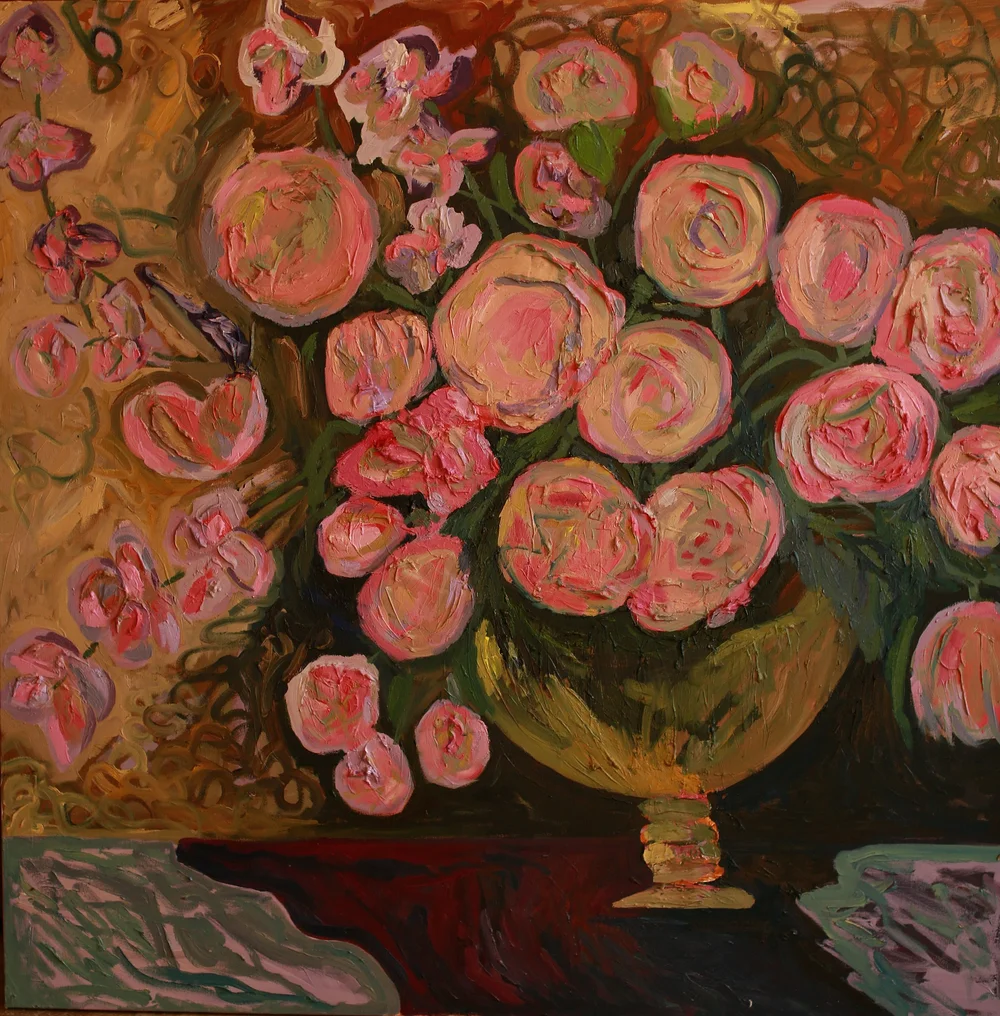
One of the ideas that continually returns throughout the series is the coexistence of beauty and grief. Flowers are often present during life's most meaningful moments, appearing in celebration and mourning alike.
Rather than choosing one interpretation, these paintings allow multiple truths to exist simultaneously. A bouquet may feel joyful to one viewer and sorrowful to another. Neither experience is wrong. The work invites both readings to exist together.
Reflection and Self-Perception
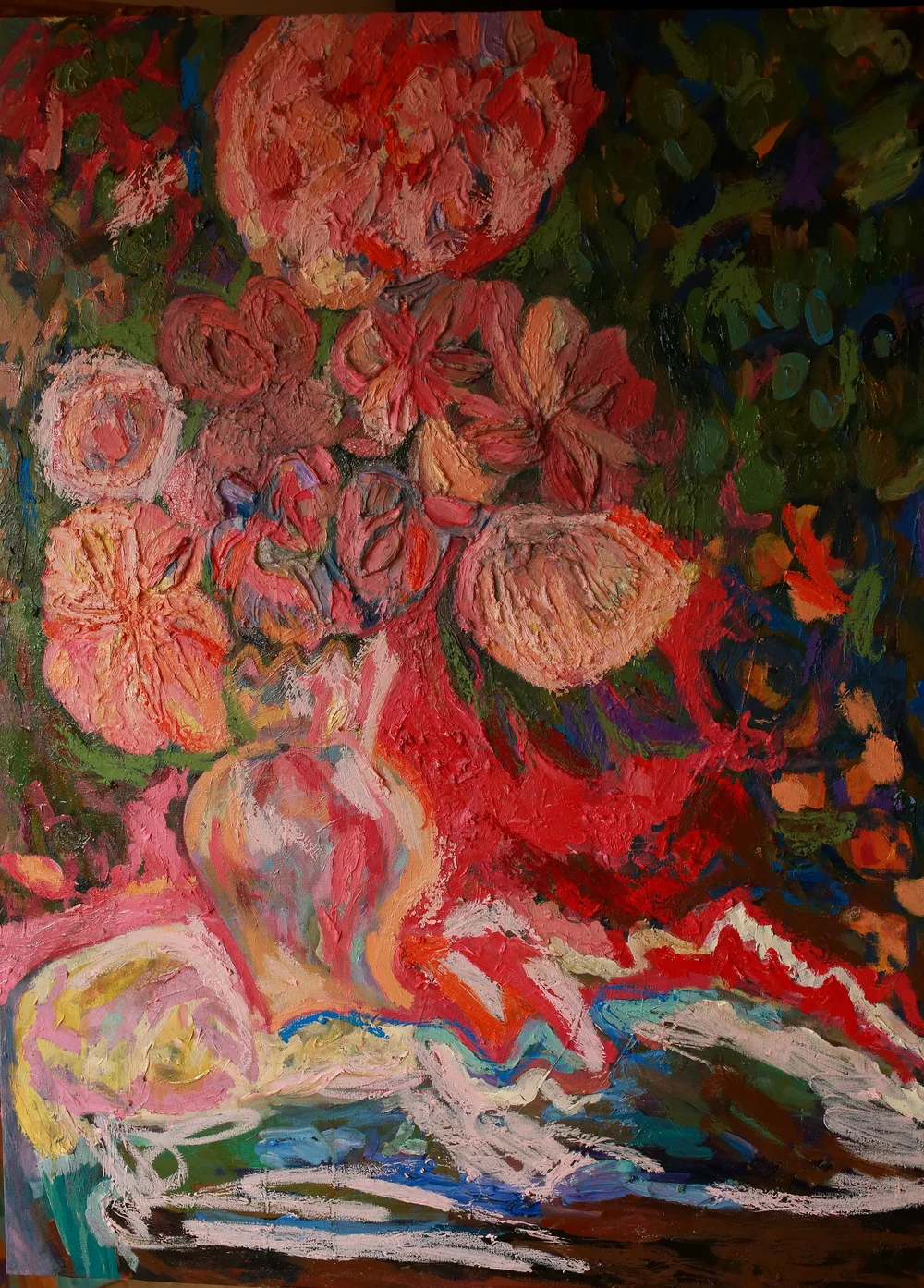
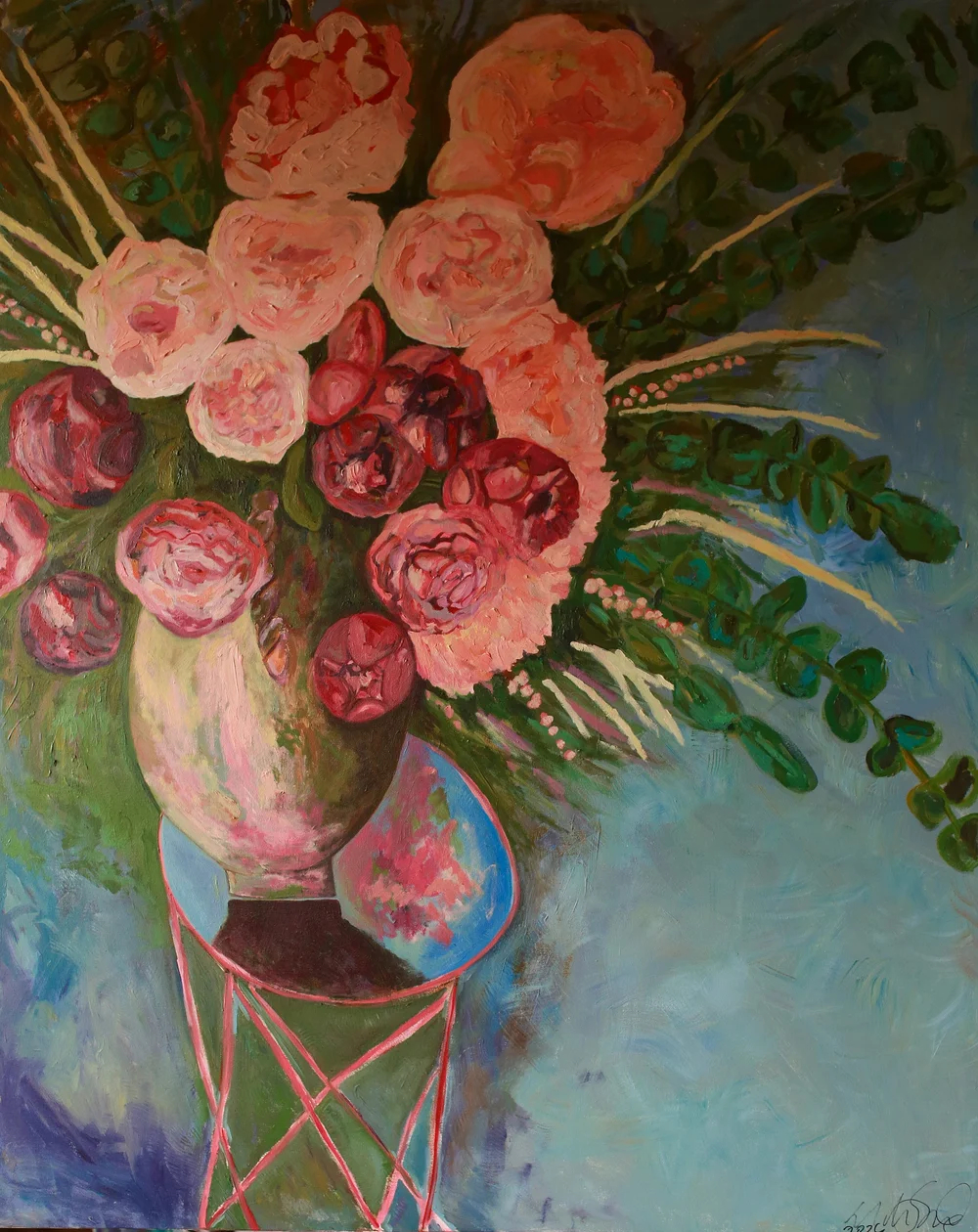
Many of these paintings explore the distance between what is felt internally and what is visible externally. Reflections emerge and dissolve. Forms appear and recede. Meaning shifts depending on perspective.
Seen / Unseen sits at the center of this investigation, asking how we come to know ourselves and how others understand us. The work embraces ambiguity, acknowledging that identity is rarely fixed or fully visible.
Taking Up Space
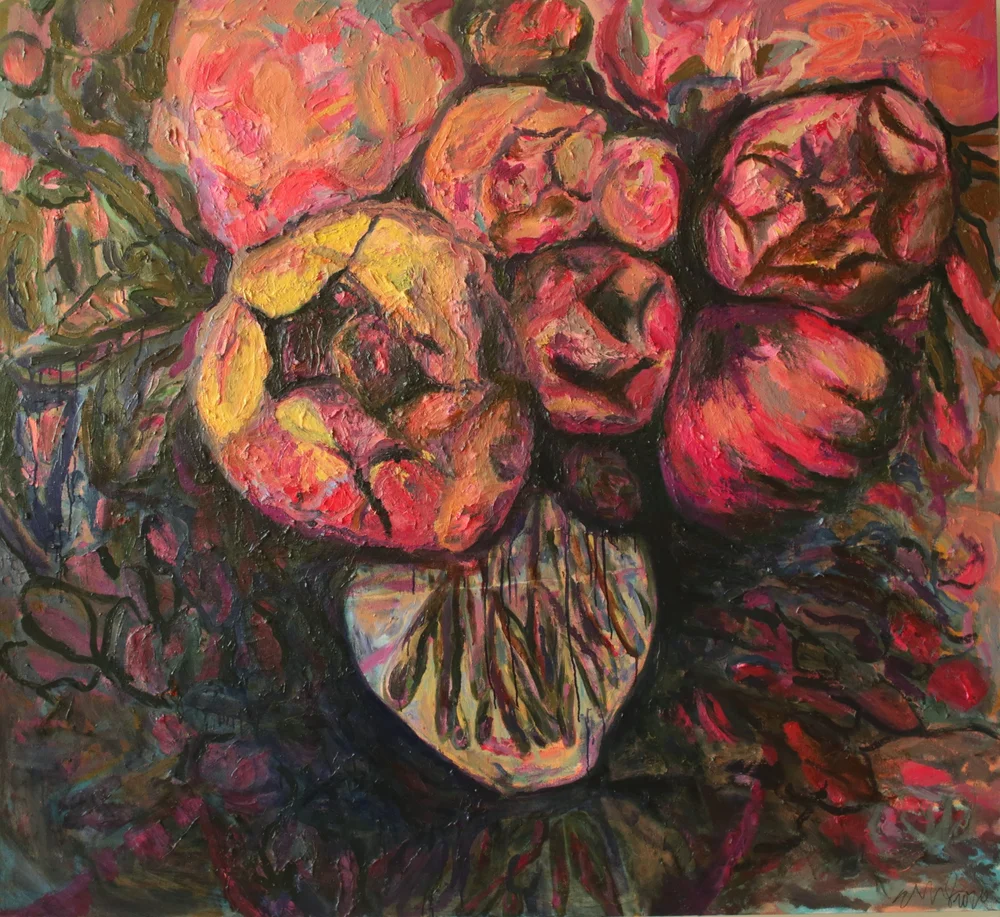
Scale plays an essential role throughout the series. Many of the paintings exceed the dimensions traditionally associated with still life, allowing flowers to become both vulnerable and monumental.
No Box Left serves as the emotional center of the series. Blooms push beyond their container and extend beyond expectations. The painting became a meditation on visibility, self-acceptance, and the freedom of no longer shrinking to fit spaces that were never meant to contain us.
Ultimately, this body of work asks what it means to take up space fully and unapologetically.
Room for Joy
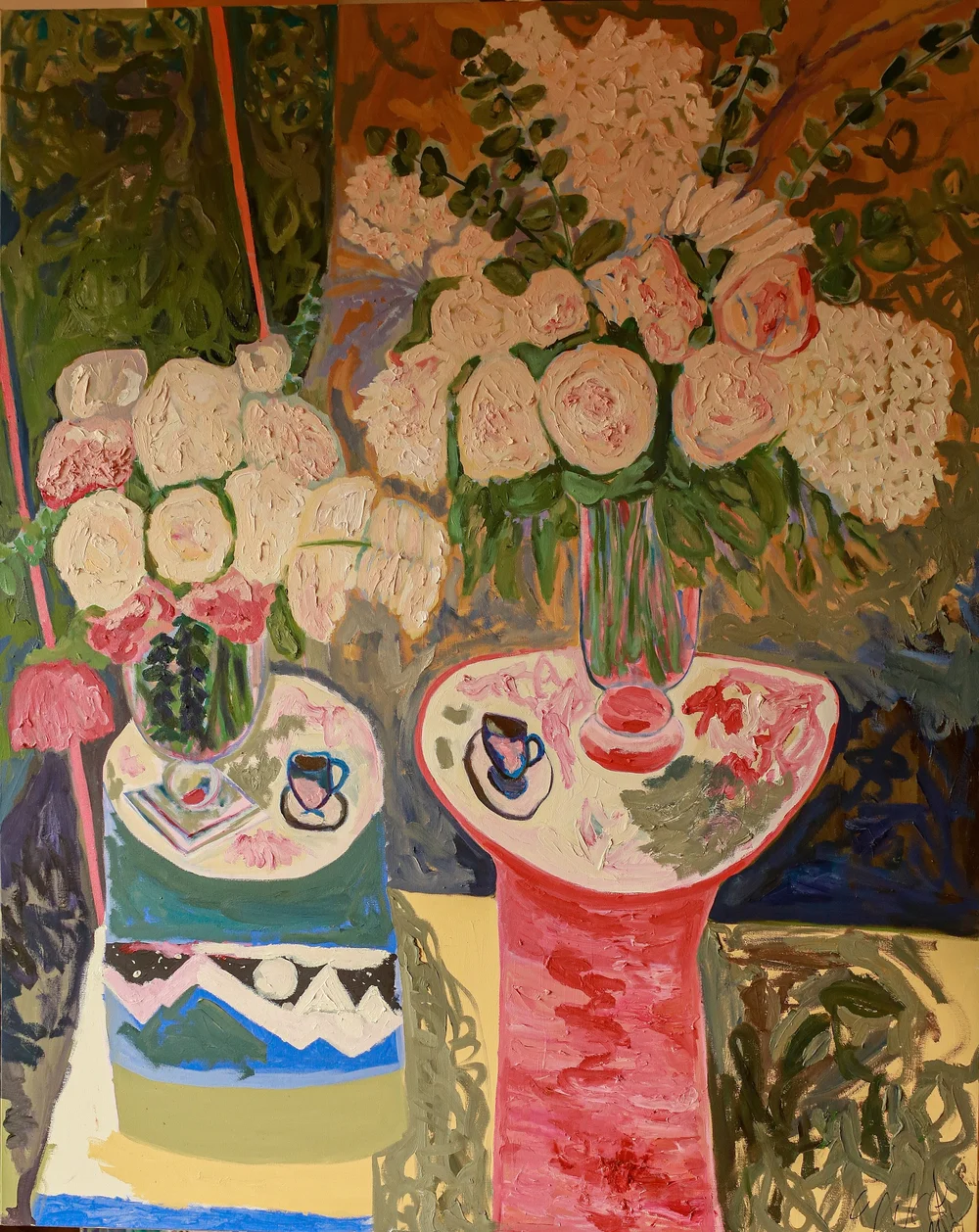
While the series explores grief, uncertainty, and self-perception, it also makes room for joy.
The Imaginary Garden grew from conversations about imagination and possibility. It reminds me that growth is not always serious and transformation is not always painful. Sometimes taking up space can be playful, hopeful, and filled with wonder.
The painting closes the series on a note of possibility, inviting viewers to imagine what might grow when we allow ourselves the freedom to become.
“We are rarely just one thing.”